





0
152
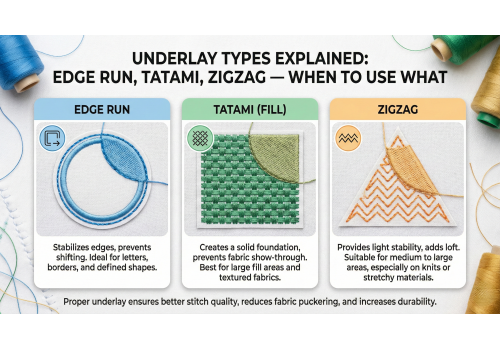
Underlay Types Explained: Edge Run, Tatami, Zigzag — When to Use What
Underlay stitches are the quiet architecture beneath every polished embroidery..
0
228
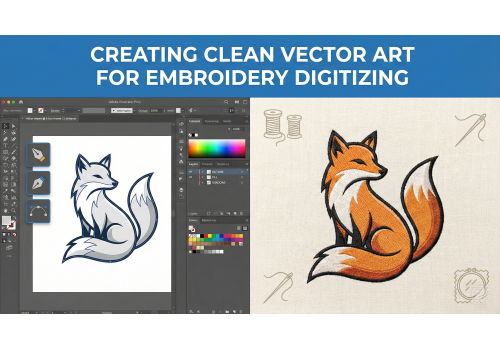
Creating Clean Vector Art for Embroidery Digitizing
Embroidery digitizing begins long before the first stitch drops. It starts in the quiet workshop..
0
57
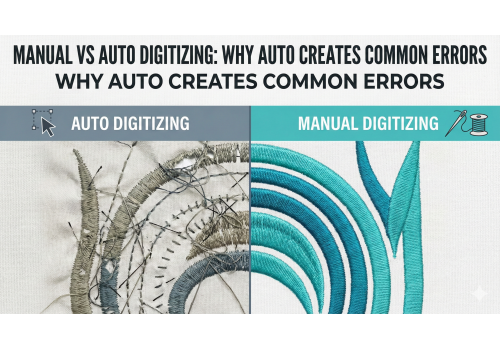
Manual vs Auto Digitizing: Why Auto Creates Common Errors
Digitizing is the invisible architecture beneath every embroidered design — the quiet set o..
0
97
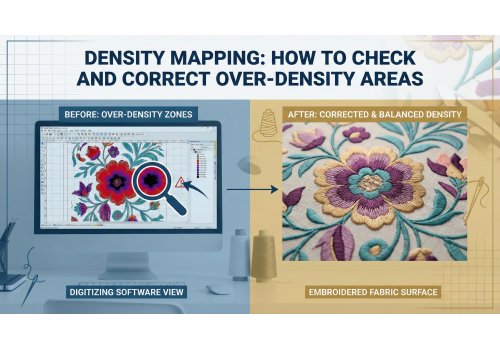
Density Mapping: How to Check and Correct Over-Density Areas
Over-density is one of the most common causes of thread breaks, needle deflection, pucke..
0
136
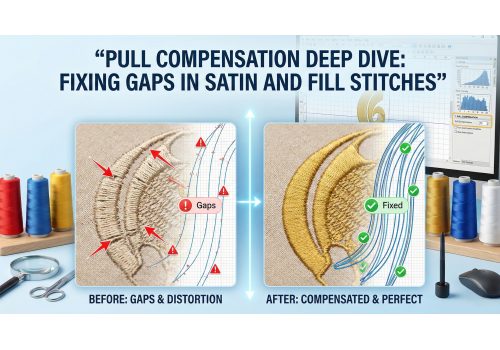
Pull Compensation Deep Dive: Fixing Gaps in Satin and Fill Stitches
Pull compensation is one of the most important digitizing techniques used to corr..
0
85
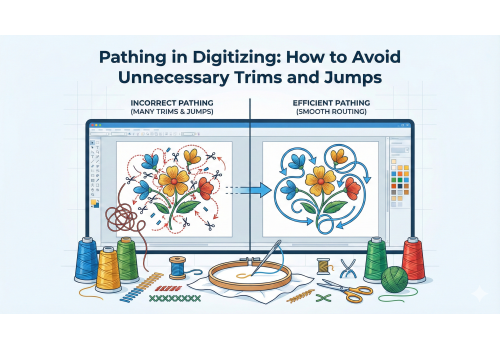
Pathing in Digitizing: How to Avoid Unnecessary Trims and Jumps
Pathing is one of the most important skills in embroidery digitizing. Good pa..

0
265
Avoiding Design Copyright Issues When Selling Embroidery Work
Copyright laws play a major role in the embroidery industry, yet man..

0
98
How to Build a Professional Embroidery Portfolio for Clients
A strong embroidery portfolio functions as a powerful business tool, especially for profe..
0
220
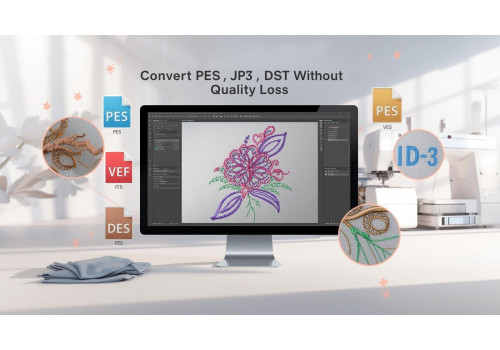
How to Convert Between PES, JEF, VP3, DST Without Losing Quality
How to Convert Between PES, JEF, VP3, DST Without Losing Quality
Convertin..
0
109
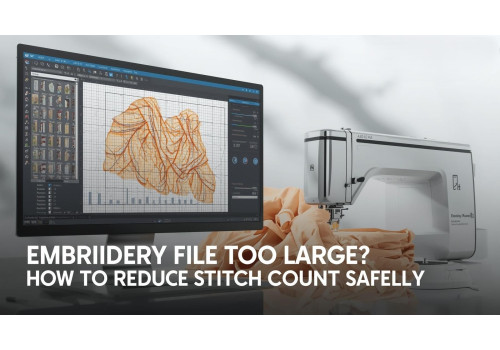
Embroidery File Too Large? How to Reduce Stitch Count Safely
Embroidery File Too Large? How to Reduce Stitch Count Safely
When an embroidery..
0
144
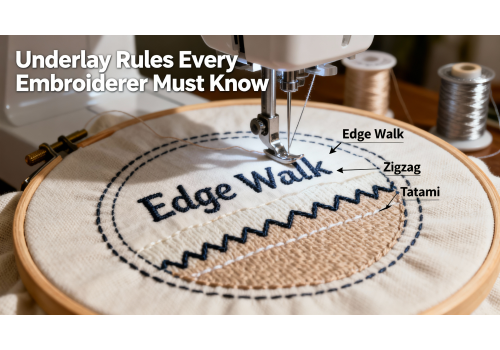
Underlay Rules Every Embroiderer Must Know to Improve Embroidery Design Quality
Underlay Rules Every Embroiderer Must Know to Fix Design Qual..
0
138
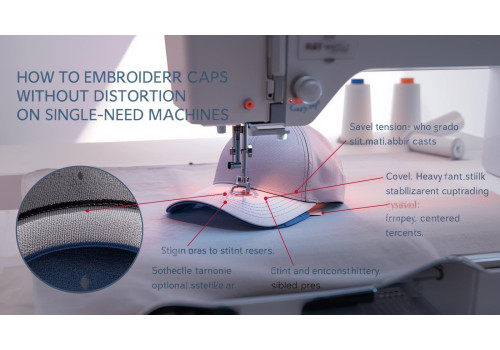
How to Embroider Caps Without Distortion on Single-Needle Machines
Embroidering caps on a single-needle machine can be challenging because hats are c..